WhatsApp:+86 18005022363 WeChat: +86 18005022363
  Email:

Description:
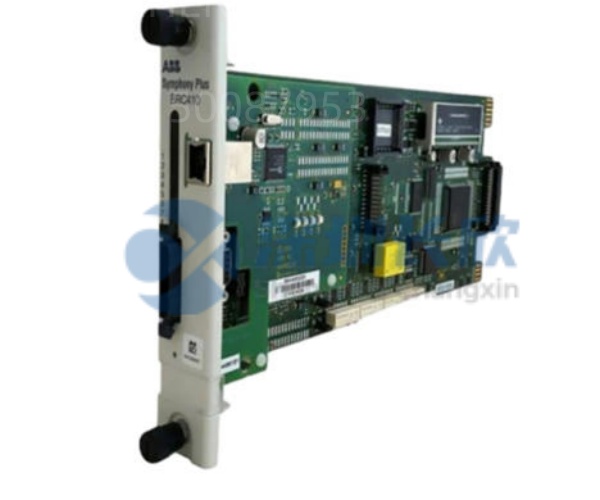
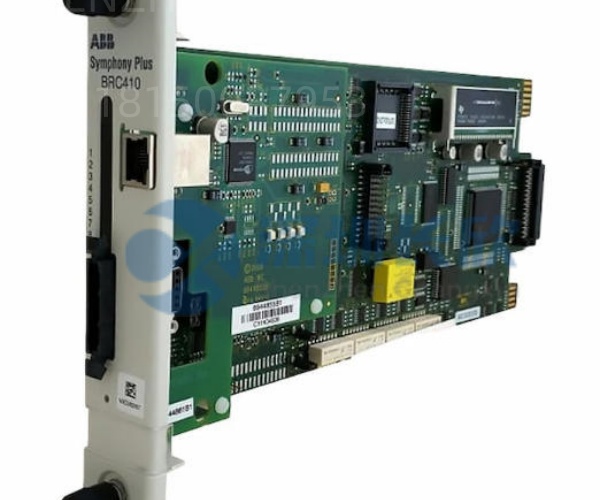
The ABB SPBRC410 is a high-performance PROFIBUS DP-V1 communication interface module, serving as the vital bus coupler for the versatile S800 I/O system. It acts as the gateway, seamlessly connecting a rack of ABB S800 I/O modules to a higher-level master controller (e.g., a DCS or PLC) via the robust PROFIBUS DP network, enabling reliable, long-distance data exchange in demanding industrial environments.
Application Scenarios:
In a sprawling water treatment plant, sensors for pH, pressure, and flow, along with actuators for valves and pumps, are scattered across vast sedimentation and filtration basins. Running individual cables from each device back to the central control room is costly and complex. This is where the ABB SPBRC410 module creates efficiency. Installed in a rugged enclosure near the field devices, it forms the heart of a remote I/O station. It connects via a single, twisted-pair PROFIBUS cable to the control room, while locally managing a rack of S800 analog and digital I/O modules wired directly to the field instruments. The SPBRC410 efficiently polls the I/O data, packages it, and transmits it cyclically over the network. This architecture drastically reduces wiring, simplifies troubleshooting, and provides a scalable, cost-effective solution for distributed process control, with the SPBRC410 ensuring reliable and deterministic data flow.
Technical Principles and Innovative Values:
The ABB SPBRC410 is more than a simple adapter; it is an intelligent subsystem manager that extends the reach of the control system with high reliability.
Innovation Point 1: Deterministic Performance and Robust PROFIBUS DP-V1 Integration. The SPBRC410 implements the full PROFIBUS DP-V1 standard, ensuring deterministic, cyclic data exchange for real-time process values and acyclic communication for device parameterization and diagnostics. Its robust, electrically isolated RS-485 interface ensures stable communication over long distances (up to several hundred meters at 12 Mbps with repeaters), even in electrically noisy industrial environments. It acts as a reliable and high-performance remote data concentrator for the control system.
Innovation Point 2: Modular and Flexible I/O Expansion. The core value of the SPBRC410 lies in its ability to host a wide array of ABB S800 I/O modules (e.g., digital input/output, analog input/output, temperature, HART). This modularity allows engineers to tailor each remote station precisely to its local mix of sensors and actuators. Modules can be mixed, matched, and hot-swapped (in supported configurations), offering unparalleled flexibility for system design, expansion, and maintenance.
Innovation Point 3: Comprehensive Diagnostics and Easy Configuration. The module features clear multi-color LEDs for at-a-glance status of power, network activity, and station health. Advanced diagnostic information, such as module failures or communication errors, is transmitted via the PROFIBUS to the master controller’s engineering station. Configuration is straightforward: the station address is set mechanically via DIP switches, and the I/O configuration is typically done in the central engineering tool (like Control Builder), which automatically generates the device master data, simplifying commissioning.
Application Cases and Industry Value:
Case Study: Retrofitting a Bulk Material Handling System with Distributed I/O
A cement plant’s legacy conveyor control system relied on miles of multi-core cabling running to a central PLC room. Troubleshooting was a nightmare, and expanding the system for a new silo was prohibitively expensive. The retrofit project replaced the hardwired approach with a distributed I/O architecture based on the ABB SPBRC410.
Several SPBRC410 stations were installed in junction boxes along the conveyor routes. Each station connected local limit switches, belt sway switches, and motor starters via S800 I/O modules. A single PROFIBUS DP trunk cable connected all these stations back to a new central controller. The SPBRC410 modules reliably handled the data exchange. The result was a 60% reduction in cabling costs, a much cleaner control cabinet, and dramatically faster fault localization. The plant engineer noted, “With the SPBRC410 stations, we can now see exactly which motor feeder on which conveyor has a fault from the control room, instead of sending an electrician on a half-mile walk with a multimeter. Adding the new silo controls was simply a matter of adding another SPBRC410 station on the existing PROFIBUS cable.”
Related Product Combination Solutions:
ABB S800 I/O Modules (e.g., DI810. DO820. AI810. AO810): The various input and output modules that connect directly to field devices and are managed by the SPBRC410 bus coupler.
ABB CI854 Communication Interface: A PROFIBUS master module for ABB AC 800M controllers, which can act as the Class 1 master for a network of SPBRC410 stations.
ABB S800 Power Supply Modules (e.g., SD822): Provides the 24V DC power required for the SPBRC410 and the S800 I/O modules in the station.
ABB S800 Base Units: The mounting units that provide the mechanical and electrical backplane for installing the SPBRC410 and other S800 I/O modules.
ABB PROFIBUS Repeaters: Used to extend the network distance beyond the standard segment limits when deploying SPBRC410 stations over very long distances.
ABB Control Builder or 800xA Engineering Tools: The software environment used to configure the I/O connected to the SPBRC410 and map it to the control application.
ABB Field Enclosures: Junction boxes or cabinets designed to house and protect remote I/O stations built around the SPBRC410.
Installation, Maintenance, and Full-Cycle Support:
Installation of an ABB SPBRC410 station involves mounting the S800 base units on a DIN rail, inserting the SPBRC410 into the first slot (as per addressing rules), and populating the remaining slots with required I/O modules. The 24V DC power supply must be connected, and the PROFIBUS DP cable terminated at the module’s 9-pin D-sub connector, ensuring proper network termination and shielding. The unique station address is set using the rotary switches.
Maintenance is highly simplified by the module’s diagnostic capabilities. The LED status indicators provide immediate local health information. For deeper analysis, the diagnostic data available in the engineering software is invaluable for preventative maintenance. If a module fails, the S800 system’s support for hot-swapping (under specific conditions and with proper procedures) allows for the replacement of a faulty I/O module, or even the SPBRC410 itself in a redundant configuration, with minimal system disruption.
We provide end-to-end support for the ABB SPBRC410 and distributed S800 I/O systems, from network design and station configuration to troubleshooting and spare parts. We supply genuine ABB modules and can assist in designing a robust, cost-effective distributed architecture that reduces your wiring complexity and increases the diagnostic capability of your automation system.