WhatsApp:+86 18005022363 WeChat: +86 18005022363
  Email:

Description:
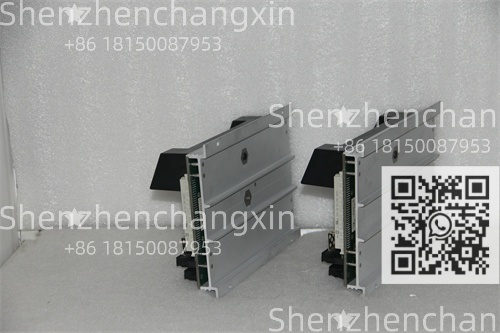
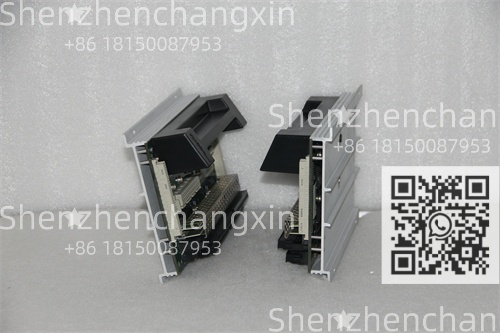
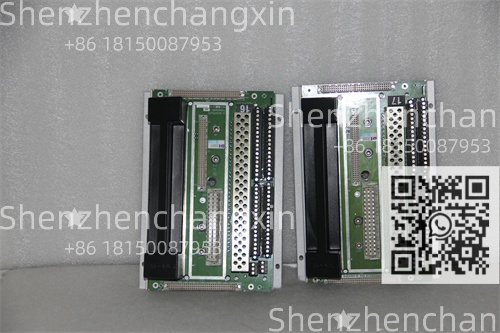
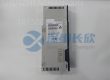
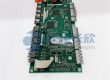
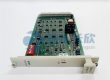
The TRICONEX 2301 (also commonly referenced as part of the 3503E model series) is a critical safety-rated analog input module designed for the Tricon TMR (Triple Modular Redundant) safety system. This module is engineered to acquire 4-20mA process signals from field transmitters with the utmost integrity, performing 1oo2D (1-out-of-2 with Diagnostics) voting internally. It is a foundational component for Safety Instrumented Systems (SIS) and Emergency Shutdown (ESD) systems in industries where failure is not an option, providing the reliable data upon which critical safety decisions are made.
Application Scenarios:
In a high-pressure natural gas processing facility, the pressure in a critical separator vessel is monitored by three independent 4-20mA transmitters as part of a Safety Instrumented Function (SIF). Each transmitter’s signal is wired to a separate channel of a TRICONEX 2301 analog input module. The module’s internal Triplicated circuitry reads all three signals simultaneously. It performs continuous diagnostics and voting logic—if one signal deviates due to a transmitter or channel fault, the module can identify and disregard it while still providing a valid, high-integrity pressure value to the Tricon main processor. This allows the safety logic solver to make a reliable “trip/no-trip” decision based on robust data, preventing both unsafe conditions and spurious shutdowns, thereby ensuring process safety and availability.
Parameter:
Technical Principles and Innovative Values:
The TRICONEX 2301 is the embodiment of fault-tolerant design, leveraging triple redundancy not as a luxury but as a fundamental requirement for functional safety.
Innovation Point 1: True Triple Modular Redundant (TMR) Architecture per Channel: Unlike simple analog cards, each input channel on the 2301 is internally triplicated. It consists of three isolated input circuits, three A/D converters, and three microprocessors. These three independent signal paths are constantly compared. The module uses a 2-out-of-3 (2oo3) voting scheme at the hardware level to produce a single, validated output value. This design ensures that a single hardware fault within the module—be it in the input circuit, converter, or processor—is masked and does not cause an erroneous output or a system failure, guaranteeing continuous, correct operation.
Innovation Point 2: Advanced Diagnostic Coverage (DC) for Safe Failure: The module goes beyond redundancy with pervasive diagnostics. It continuously tests itself for opens, shorts, and out-of-range signals. It also performs cross-comparisons between the three redundant signal paths. Any discrepancy that could indicate a latent or dangerous failure is immediately reported to the main processor and can trigger a predefined safe state. This high diagnostic coverage is essential for achieving a high Safety Integrity Level (SIL 3), as it ensures most failures are detected and become “safe” failures, preventing undetected dangerous faults.
Innovation Point 3: Hot Swapability for Maximum Availability: The 2301 module is designed to be replaced while the Tricon system remains powered and operational. This is critical for continuous processes. If a module fault is diagnosed, a technician can remove and replace the faulty 2301 without causing a process shutdown. The system automatically recognizes the new module, downloads the configuration, and brings it online seamlessly. This feature maximizes system uptime and supports online maintenance, a key requirement for modern safety systems.
Application Cases and Industry Value:
Case 1: Offshore Oil Platform Emergency Shutdown (ESD) System: An offshore platform’s ESD system, based on a Tricon controller, uses numerous TRICONEX 2301 modules to monitor pressures, levels, and fire & gas detector signals. During a major storm, a lightning strike induced a surge on a field wiring loop, damaging one of the three input circuits on a pressure channel. The 2301 module’s diagnostics instantly identified the discrepancy. Its TMR architecture masked the faulty circuit, allowing the safety system to continue operating on the two good signals without loss of protection. An alarm was raised for maintenance, but a full, costly platform shutdown was avoided. The module was replaced online during the next calm weather window, demonstrating flawless fault tolerance.
Case 2: Chemical Plant Burner Management System (BMS): A furnace in a large chemical plant uses a Tricon-based BMS for critical flame safety. The TRICONEX 2301 modules are used to read analog signals from fuel flow meters, air pressure transmitters, and furnace draft sensors. The high accuracy and integrity of these signals are vital for safe burner sequencing and trip logic. The plant’s safety engineers valued the 2301’s ability to provide not just a value, but also a “quality” status for each point. This allowed for sophisticated voting schemes in the logic (e.g., 2oo3 voting on pressure) which drastically reduced the chance of a nuisance trip from a single instrument drift while maintaining the highest level of safety, optimizing both protection and production uptime.
Related Product Combination Solutions:
Tricon Main Processor (e.g., 3008. 3009): The central TMR controller that executes the safety logic based on inputs from the 2301 and other modules.
Tricon Chassis/ Power Supply (e.g., 3511): The backplane and power infrastructure that houses and powers the 2301 and other I/O modules.
Tricon Analog Output Module (e.g., 3805E): Used to send control signals to final elements (like control valves) based on the logic solver’s decisions informed by 2301 inputs.
Tricon Digital Input/Output Modules (e.g., 3664. 3625): Handle discrete signals (e.g., switch contacts, solenoid commands) in the same safety system.
TriStation 1131: The engineering software used to configure, program, and diagnose the entire Tricon system, including the 2301 module’s scaling, alarms, and diagnostics.
Field Transmitters (Pressure, Level, Flow): The source of the 4-20mA signals that connect to the 2301 module’s channels.
IS (Intrinsic Safety) Barriers or Isolators: Often used between field transmitters in hazardous areas and the 2301 module in the safe-area control room to provide intrinsic safety protection.
Installation, Maintenance, and Full-Cycle Support:
Installation of the TRICONEX 2301 must follow rigorous safety lifecycle procedures. The module is inserted into a designated slot in the Tricon chassis until it locks into place. Field wiring from the IS barriers or transmitters is landed on the module’s removable terminal block, with strict adherence to separation standards for safety signals. Configuration is performed entirely within the TriStation 1131 project, where each channel is assigned a tag, engineering units, trip alarms, and diagnostic behavior.
Maintenance is driven by the system’s diagnostics. The module’s status is continuously indicated by LEDs and reported in TriStation. Scheduled proof tests, as defined in the Safety Requirements Specification (SRS), should be performed to validate the entire loop’s functionality. If a module fault is confirmed, it can be hot-swapped. The key is to have the exact configuration backed up. We supply the genuine TRICONEX 2301 module. Our support includes verifying the exact firmware/hardware revision compatibility with your existing system and can provide guidance on the hot-swap procedure and post-replacement verification to ensure your safety system’s integrity is fully restored.
Contact us for the genuine TRICONEX 2301 safety analog input module to maintain the highest level of integrity in your critical safety instrumented system.