WhatsApp:+86 18150087953 WeChat: +86 18150087953
  Email:
 Description
 Description
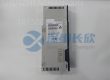
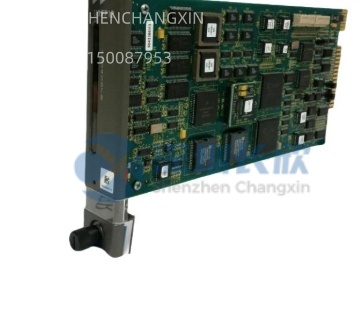
The ABB IMMFP01 is a specialized communication interface module designed for ABB’s Advant Controller series, specifically the AC 410 and AC 450 platforms. This module serves as a critical communication processor, enabling connectivity between the controller and Operator Control System (OCS) stations or other devices via the MPI (Multi Point Interface) network. It acts as a fundamental gateway for operator interaction, data exchange, and system configuration within the Advant Station automation environment.
Application Scenarios
In a large chemical processing plant, operators in the central control room rely on multiple Advant Station OCS consoles to monitor reactor temperatures, pressures, and valve statuses in real-time. The ABB IMMFP01 modules installed within each AC 450 controller cabinet are the vital links that make this possible. Each IMMFP01 manages the high-speed MPI network connection, ensuring that process data from the controller’s logic and I/O scans is reliably and consistently delivered to the graphical displays. When an operator at an OCS station adjusts a setpoint, the command travels back through the IMMFP01 to the controller. The module’s role in maintaining this deterministic data flow solves the critical challenge of providing operators with a seamless, lag-free view and control of the process, which is essential for both efficiency and safety. Its failure would isolate the controller from the operator interface, effectively blinding the control room to that process unit.
Parameter
Technical Principles and Innovative Values
The ABB IMMFP01 was a key component in enabling the distributed yet cohesive architecture of ABB’s classic Advant Station system, offering specific innovations for its time.
Innovation Point 1: Dedicated OCS Connectivity Processor. The IMMFP01 offloaded the critical task of OCS communication from the controller’s main CPU. By handling the MPI network protocol stack and data packaging/parsing on a dedicated hardware module, it ensured that the real-time control cycle of the AC 410/450 controller remained unaffected by the data traffic to and from the operator stations. This separation of concerns was crucial for achieving deterministic control performance in complex applications.
Innovation Point 2: MPI Network Facilitation. During the era of the Advant Station, MPI was a robust, proprietary network for supervisory communication. The IMMFP01 implemented this protocol efficiently, allowing multiple OCS stations, engineering stations, and controllers to coexist on the same network. It managed station addresses, token passing, and data consistency, forming the reliable backbone for the entire operator interface layer of the automation system.
Innovation Point 3: Seamless System Integration. The module was designed for plug-and-play integration within the Advant controller rack ecosystem. Its identity and configuration were recognized automatically by the controller’s system software. This deep integration simplified engineering and commissioning, as the communication path to the OCS was a pre-defined, stable component of the system architecture, reducing configuration errors and startup time.
Application Cases and Industry Value
Case Study: Pulp and Paper Mill, Scandinavia. A large integrated pulp mill relied on a distributed ABB Advant system with over 20 AC 450 controllers for its digester, washing, and bleaching plants. The central control room used eight Advant Station OCS consoles. The reliability of the IMMFP01 modules in each controller was paramount. A single failure would have severed the operator’s view and control of an entire process area. During a major system lifecycle upgrade, while migrating to a new DCS, the mill maintained a critical stock of IMMFP01 spares. This strategy allowed them to support the legacy system reliably for a decade-long phased migration. The plant’s lead instrument engineer noted that the proven reliability of these communication modules was a key factor in allowing a cost-effective, low-risk migration strategy, avoiding a costly “big-bang” replacement.
Case Study: Legacy Power Plant Control System Support, USA. A coal-fired power plant continued to operate its boiler and turbine control using an ABB MOD 300/Advant system. Sourcing obsolete spares was a challenge. When an IMMFP01 module in a turbine control cabinet failed, causing loss of visualization for critical speed and temperature controls, the plant faced potential derating or shutdown. A specialist supplier provided a refurbished and tested IMMFP01. which was installed during a scheduled outage. The module’s straightforward form factor and the system’s auto-recognition feature allowed for a swift replacement. The control link to the OCS was restored seamlessly, demonstrating the enduring value of maintaining support for these robust, legacy communication interfaces to ensure operational continuity for critical infrastructure.
Related Product Combination Solutions
The ABB IMMFP01 functions as a node within the classic Advant/MOD 300 ecosystem. Key related components include:
Advant Controller AC 450: The primary process controller where the IMMFP01 module is typically installed, providing the control logic and I/O management.
Advant Controller AC 410: A compact controller variant that also utilizes the IMMFP01 for OCS communication.
Operator Control Station (OCS): The Advant Station operator interface (e.g., models with IMDSI02 displays) that connects to the controller via the MPI network managed by the IMMFP01.
CI520 / CI525: Communication Interface modules for the AC 450 controller that handle other fieldbus protocols (like Profibus DP), working alongside the IMMFP01 which handles the OCS network.
S800 I/O System: The distributed I/O family (with modules like 3BSE008515R1 DI801) that connects to the AC 410/450 controllers via bus couplers, providing the actual field signal interface.
MasterBus 300 Network: The broader network architecture in which the MPI network for OCS communication operates.
Engineering Station (ES): The software configuration and programming workstation, which also connects to the controller’s MPI network for project download and online monitoring.
Installation, Maintenance, and Full-Cycle Support
Installation of the ABB IMMFP01 requires the controller to be powered down. The module is carefully inserted into its designated slot in the AC 410 or AC 450 rack, ensuring it is firmly seated in the backplane connector. The MPI network cable is then connected to its front port, with proper termination at the network ends. Upon power-up, the Advant controller’s system software typically recognizes the module automatically. Configuration primarily involves setting the correct node address for the controller on the MPI network via hardware switches or software settings to ensure it matches the OCS station’s configuration.
Routine maintenance is passive, focusing on ensuring good cabinet ventilation to prevent overheating. The primary diagnostic tool is the module’s status LEDs, indicating power and network activity. A failure is usually apparent by a loss of communication to the OCS for that specific controller. Replacement involves swapping the module with an identical unit. We provide specialized support for legacy ABB systems like the Advant series. We can supply fully tested, refurbished IMMFP01 modules to ensure the longevity of your operational system. Our services include compatibility verification and technical guidance for replacement procedures, helping you maintain critical control links affordably and reliably.
Need to maintain connectivity in your legacy Advant control system? Contact us for expert support and reliable sourcing for the ABB IMMFP01 and other classic ABB modules.