WhatsApp:+86 18005022363 WeChat: +86 18005022363
  Email:
Description

Application Scenarios:
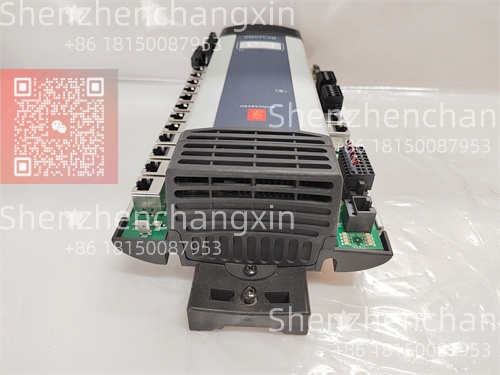
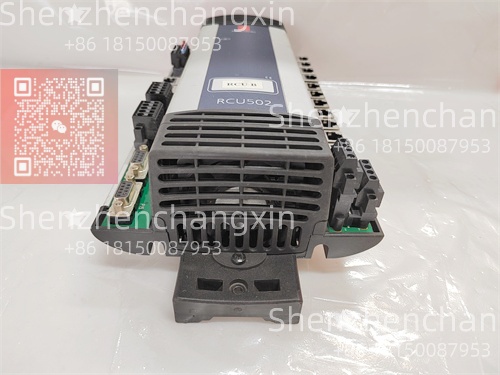
Onboard a modern LNG carrier, the reliable operation of cargo handling, power generation, and safety systems is paramount. Engineers in the control room need a unified, real-time view of thousands of data points from engine room pumps, tank level sensors, and fire detection systems. A network of KONGSBERG RCU502 units, strategically installed in distributed machinery spaces, serves as the system’s “nerve centers.” Each RCU502 gathers data from local sensors and instruments, processes control logic (like starting a backup pump on low pressure), and communicates seamlessly over a redundant network to the central operator workstations. When a high-temperature alarm triggers in the purifier room, the local RCU502 processes the signal instantly, activating local warnings and transmitting the alarm to the bridge, all while continuing to monitor hundreds of other points without interruption. This architecture directly addresses the key pain points of centralized system vulnerability, cabling complexity, and slow response times, ensuring decentralized intelligence and robust vessel-wide control.
Technical Principles and Innovative Values:
Innovation Point 1: Distributed, Network-Centric Architecture for Enhanced Survivability. Unlike centralized PLCs, the KONGSBERG RCU502 embodies a fully distributed control philosophy. Multiple RCU502 units are deployed close to the machinery they control, connected via a redundant, high-integrity network (like CAN Bus). This design drastically reduces long cable runs, minimizes single points of failure, and ensures that a fault in one zone (e.g., engine room) does not compromise control in another (e.g., cargo control). The system’s overall survivability and availability are significantly increased.
Innovation Point 2: Maritime-Hardened Design with Integrated Diagnostics. The RCU502 is not a commercial PLC; it is engineered from the ground up for the maritime environment. It features robust construction to withstand shock, vibration, wide temperature fluctuations, and corrosive atmospheres. Furthermore, it possesses extensive self-diagnostic capabilities, continuously monitoring its own health, communication links, and connected I/O modules, providing pre-failure alerts to the crew for predictive maintenance.
Innovation Point 3: Seamless Integration within Kongsberg’s Ecosystem. The RCU502 is optimized to work seamlessly with Kongsberg’s complete IAS. It uses a marine-specific engineering tool (Marine Information Manager) for configuration, which standardizes programming across the entire vessel. It natively interfaces with Kongsberg’s remote I/O blocks, operator stations, and historical data servers, reducing integration complexity and ensuring reliable, deterministic data exchange across the vessel’s automation network.
Application Cases and Industry Value:
A new-build offshore supply vessel (OSV) required a highly reliable automation system to manage its complex dynamic positioning (DP) and mission equipment. The shipyard selected Kongsberg’s integrated solution, with KONGSBERG RCU502 units as the distributed controllers. One RCU502 was dedicated to the power management system (PMS), controlling and synchronizing three diesel generators. Another managed the ballast and bilge systems, while others handled general alarm monitoring and auxiliary control. During sea trials, the redundant network and the deterministic performance of the RCU502 controllers were crucial for achieving DP-2 certification. The chief engineer later reported, “The distributed nature of the RCU502-based system makes troubleshooting remarkably straightforward. We can isolate and address issues in one system without affecting others. The reliability has been exceptional, contributing directly to our 99.5% operational availability.” This case highlights the product’s value in enabling complex vessel functions, achieving mandatory certifications, and ensuring high uptime through distributed, fault-tolerant architecture.
Related Product Combination Solutions:
KONGSBERG DIO801: A Digital Input/Output module. This is a typical remote I/O unit that connects directly to the CAN bus network, with its I/O points configured and scanned by a parent RCU502 controller.
KONGSBERG AIO801: An Analog Input/Output module. Similar to the DIO, it handles analog signals (4-20mA, 0-10V) and is managed by an RCU502. forming the complete distributed I/O layer.
KONGSBERG OCS-5050: An Operator Control Station (workstation). This is the primary HMI where operators monitor and control the processes managed by the network of RCU502 units.
KONGSBERG PMS (Power Management System): An application software package that runs on one or more RCU502 controllers, dedicated to generator control, load sharing, and bus-tie logic.
KONGSBERG MIM (Marine Information Manager): The engineering and configuration software used to program, configure, and diagnose the RCU502 and the entire IAS network.
KONGSBERG K-Chief 600: The name of the overarching integrated automation system in which the RCU502 commonly serves as a primary data acquisition and control unit.
KONGSBERG SSU881: A Standalone Start-up Unit. For local machinery control, it can interface with or operate under the supervision of a central RCU502 controller.
Installation, Maintenance, and Full-Cycle Support:
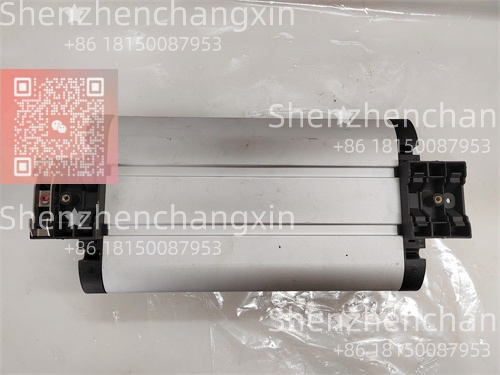
Installation of the KONGSBERG RCU502 involves mounting the unit in a protected cabinet or enclosure within the machinery space, following Kongsberg’s spacing guidelines for ventilation. Power is supplied via redundant, protected DC sources as per marine standards. The critical step is network integration: connecting it to the redundant CAN bus (and Ethernet if equipped) using marine-grade, shielded, twisted-pair cables with proper terminations. Each unit must be configured with a unique node address. Commissioning is performed using the MIM software to download the specific application program (e.g., for PMS, alarm monitoring, etc.) and map I/O points from connected remote I/O modules.
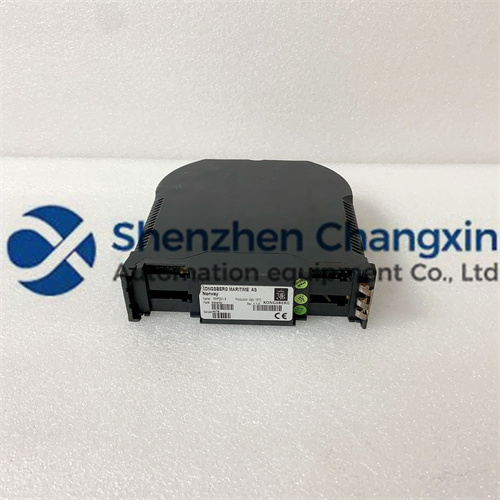
Maintenance is primarily preventative and diagnostic. The RCU502 continuously reports its health status to the operator station. Regular checks involve verifying the “healthy” status LED, ensuring communication links are active, and checking for any environmental issues like excessive heat or moisture in the cabinet. Firmware updates, when required, are performed under controlled conditions using official Kongsberg packages. In the event of a hardware fault, the modular design allows for replacement. The new unit must be of the exact same hardware/software version, and its application program must be restored from a backup. We supply fully tested and verified KONGSBERG RCU502 units. Our technical support assists with configuration backup/restore procedures and compatibility verification, ensuring a smooth integration or replacement to maintain the integrity of your vessel’s critical automation systems.
Contact us for your KONGSBERG RCU502 requirements and for expert support on maritime automation system maintenance and upgrades.