WhatsApp:+86 18005022363 WeChat: +86 18005022363
  Email:
Description

Application Scenarios:
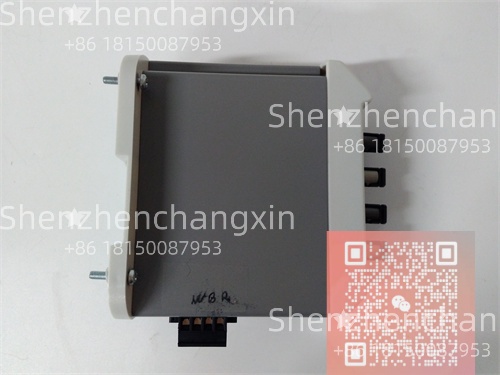
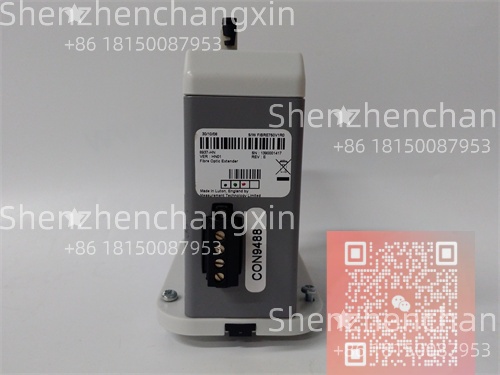
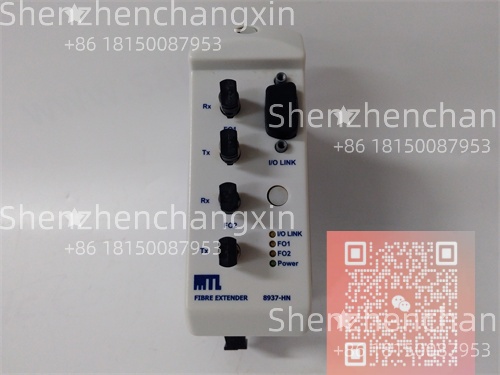
In the heart of a natural gas processing plant, maintaining precise control over pipeline pressure is critical for safety and efficiency. A sudden, undetected overpressure could lead to equipment failure or a dangerous release. Installed directly on a high-pressure line within a Class I, Division 1 hazardous area, the HONEYWELL 8937-HN pressure transmitter continuously measures this vital parameter. Its robust, hermetically sealed housing withstands vibration, moisture, and corrosive elements. The intrinsically safe design of the HONEYWELL 8937-HN ensures that even in the event of an internal fault, insufficient energy is released to ignite surrounding gases. Its 4-20mA output provides a failsafe signal to the plant’s Distributed Control System (DCS), allowing operators to maintain optimal pressure and triggering immediate safety shutdowns if limits are exceeded, forming a fundamental layer of protection for personnel and assets.
Parameter:
Technical Principles and Innovative Values:
Innovation Point 1: Advanced Sensing Element with Superior Stability. The core of the HONEYWELL 8937-HN is a high-performance sensing element—whether a micro-machined silicon sensor for pressure or a catalytic bead/pellistor for gas detection. This element is laser-trimmed and temperature-compensated to provide exceptional long-term stability and accuracy. This minimizes calibration drift, reducing maintenance frequency and ensuring the integrity of safety-related measurements over extended periods, which is paramount in inaccessible or high-risk locations.
Innovation Point 2: Comprehensive Intrinsic Safety by Design. The entire circuitry of the HONEYWELL 8937-HN is engineered to the stringent principles of intrinsic safety. It incorporates current and voltage-limiting barriers, zener diodes, and isolation techniques to ensure that the electrical energy available in the hazardous area, even under fault conditions, is always below the level required to ignite a specific gas mixture. This design allows for live maintenance and calibration without requiring a “hot work” permit, significantly enhancing operational safety and flexibility.
Innovation Point 3: Robust Environmental Protection for Maximum Reliability. Beyond explosion protection, the HONEYWELL 8937-HN is built to survive the plant’s harshest conditions. It features a stainless-steel or specially coated housing with a high IP/NEMA rating, protecting the electronics from dust, water jets, and corrosive atmospheres. Advanced sealing technologies and moisture-resistant circuit boards prevent internal condensation and corrosion, ensuring reliable operation in environments with wide temperature swings and high humidity, leading to a dramatically extended service life.
Application Cases and Industry Value:
Case Study: Offshore Gas Platform Flare Gas Monitoring
An offshore production platform was required to continuously monitor hydrocarbon concentrations at the flare tip to ensure complete combustion and comply with environmental regulations. The location is exposed to salt spray, constant vibration, and is a classified Zone 1 hazardous area. The HONEYWELL 8937-HN gas detection transmitters were selected for this duty. Their combination of ATEX/IECEx Zone 1 certification and IP66/67 enclosure made them uniquely suited. The transmitters provided a stable 4-20mA signal proportional to lower explosive limit (LEL) levels back to the control room. Their reliability eliminated frequent failures experienced with previous equipment, ensuring continuous compliance and providing an early warning of inefficient combustion. The platform’s safety engineer reported a 60% reduction in maintenance interventions related to flare monitoring, directly attributable to the robustness of the HONEYWELL 8937-HN units.
Case Study: Chemical Reactor Overpressure Protection
A batch chemical process involved exothermic reactions where a runaway could generate dangerous pressures. Redundant pressure transmitters were required as part of the Safety Instrumented System (SIS). The HONEYWELL 8937-HN pressure transmitters were installed on the reactor head. Their high accuracy and fast response time provided precise data to the SIS logic solver. More critically, their intrinsic safety certification allowed them to be connected directly to the IS barriers in the control system without the need for bulky explosion-proof housings and sealed conduits, simplifying installation and reducing costs. During a process upset, one transmitter provided the primary trip signal to open a relief valve, preventing a potential incident. The HONEYWELL 8937-HN’s role was vital in providing a reliable, safety-certified measurement that met SIL 2 requirements.
Related Product Combination Solutions:
A complete safety or process measurement loop involving the HONEYWELL 8937-HN typically includes:
HONEYWELL IS-Barriers (e.g., 7861 Series): These intrinsic safety barriers are installed in the safe area to limit the energy reaching the HONEYWELL 8937-HN in the hazardous area, a required component for IS loops.
HONEYWELL Safety Manager or ControlEdge PLC: The logic solver or safety controller that receives the signal from the HONEYWELL 8937-HN and executes the safety or control function.
HONEYWELL Experion DCS: The Distributed Control System where the HONEYWELL 8937-HN signal is displayed, logged, and used for regulatory control.
HONEYWELL HART Communicator or Field Device Manager (FDM): Configuration and diagnostic tools used to calibrate, range, and troubleshoot the HONEYWELL 8937-HN transmitter via the HART protocol.
Calibration Equipment: Portable pressure calibrators or gas test kits certified for use in hazardous areas, necessary for periodic validation of the HONEYWELL 8937-HN.
Explosion-Proof or Stainless Steel Enclosures: For applications where additional mechanical protection or isolation is needed, though the 8937-HN itself is often rated for direct installation.
HONEYWELL MCT Series Temperature Transmitters: For complementary temperature measurement in the same hazardous loop, often used alongside pressure devices.
Installation, Maintenance, and Full-Cycle Support:
Installation of the HONEYWELL 8937-HN must be performed by qualified personnel following all applicable national and local codes for hazardous areas. Key steps include verifying the area classification matches the device certification, proper grounding, and connection through correctly rated intrinsic safety barriers. Wiring must use approved IS methods. For gas detectors, correct placement per dispersion models is critical. Initial configuration, including range setting and damping, is typically done via HART protocol.
Routine maintenance involves scheduled functional checks (bump tests for gas detectors) and calibration against traceable standards, as dictated by safety integrity level (SIL) or quality management requirements. The HONEYWELL 8937-HN is designed for long-term stability, reducing calibration frequency. Diagnostics via HART can reveal sensor life or early warnings. In the event of a failure, module replacement is often straightforward, with sensor and electronics designed as replaceable units to minimize downtime and spare parts inventory.
We provide comprehensive support for Honeywell safety and process instruments. From helping select the correctly certified model for your area classification to supplying factory-calibrated HONEYWELL 8937-HN units, we ensure compliance and performance. Our technical team can assist with loop verification and troubleshooting. We stand behind our products with a solid warranty and are committed to providing the documentation and expertise needed to maintain the integrity of your critical safety and process loops.
Contact us for certified HONEYWELL 8937-HN products and expert support to ensure the safety and reliability of your hazardous area applications.