WhatsApp:+86 18005022363 WeChat: +86 18005022363
 Email:

Description
Application Scenarios
In a Middle East refining facility, engineers faced recurring challenges with control-loop latency and intermittent communication dropouts between the DCS and remote I/O nodes in a sulfur recovery unit. After deploying the AFG10S as the central Field Control Unit, the plant achieved consistent 200 ms control cycles, eliminated single points of failure through its dual-redundant Vnet/IP architecture, and reduced unplanned downtime by over 40% within the first six months. Technicians particularly valued the 72-hour battery-backed memory retention, which preserved control logic and process data through multiple short power interruptions without requiring a full restart.This real-world case illustrates why the AFG10S remains a trusted workhorse: it addresses the core pain points of process automation—deterministic execution, communication integrity, and resilience under adverse power conditions—making it indispensable in environments where even a brief control lapse can carry significant safety and financial consequences.
Parameter
| Main Parameters | Value/Description |
|---|---|
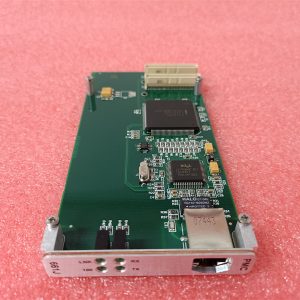
| Product Model | AFG10S |
| Manufacturer | Yokogawa Electric Corporation (Japan) |
| Product Category | Field Control Unit (FCU) / Safety FCU (SFCU) |
| Processor | VR5432 RISC, 133 MHz — deterministic industrial-grade computing |
| Main Memory | 32 MB (battery-backed, 72-hour retention) |
| Control Cycle | Minimum 100 ms (typical 200 ms – 1 s) |
| Communication Interface | Dual-redundant Vnet/IP (10/100 Mbps) + Dual/single RIO bus |
| Max Connected Nodes | 8 I/O node units (NIU) |
| Power Supply | 24 V DC (±10%) — also available in 100–120 V AC / 220–240 V AC variants |
| Power Consumption | Approx. 80 W (AC: 250 VA; DC: 4.5–10 A) |
| FIO Slots | 16 slots for Field I/O modules |
| Safety Integrity Level | SIL 2 (TÜV certified, ProSafe-RS compatible) |
| Ready Contact Output | 30 V DC, 0.3 A max (NC contact opens on FCU fault) |
| Operating Temperature | 0 to +55 °C (some variants rated -20 to +70 °C) |
| Vibration / Shock Resistance | 10–500 Hz, 1.5 mm amplitude / 50 G, 11 ms |
| Mounting Method | 19-inch rack mount (8 × M5 screws) |
| Dimensions (W×H×D) | 207 × 265.9 × 482.6 mm |
| Weight | Approx. 8–19 kg (depending on configuration) |
| Protection Rating | IP20 (installed inside control cabinet) |
Technical Principles and Innovative Values
- Innovation Point 1 — Deterministic RISC Architecture: Unlike commercial CPUs optimized for benchmarks, the VR5432 RISC processor in the AFG10S is tuned for predictable, repeatable execution. This guarantees that control loops complete within a fixed time window—critical for safety interlocks and closed-loop regulatory control where timing jitter is unacceptable.
- Innovation Point 2 — Dual-Redundant Vnet/IP Communication: The AFG10S features two independent Vnet/IP ports, allowing seamless failover if one control network path is compromised. This architecture supports Yokogawa’s “Pair and Spare” philosophy, targeting 99.99999% system availability with no single point of failure.
- Innovation Point 3 — 72-Hour Battery-Backed Memory: Process variables, control logic, and system state are preserved for up to 72 hours during a power outage. Once power is restored, the AFG10S resumes operation without re-downloading applications or re-initializing I/O—a decisive advantage in remote or unstable power environments.
- Innovation Point 4 — Dual-Role Capability (Process + Safety): Certified to SIL 2 under the ProSafe-RS framework, the AFG10S can simultaneously handle continuous process control and safety instrumented functions. This dual-role design reduces hardware footprint and simplifies system architecture compared to running separate DCS and SIS controllers.
- Innovation Point 5 — Scalable I/O Topology: Through the RIO/ESB bus, a single AFG10S can manage up to 8 node units, each hosting 8 I/O modules. This cascading structure lets a medium-sized plant centralize control while distributing field wiring—cutting installation cable costs and cabinet space.
- Innovation Point 6 — Open Connectivity Without Compromise: While Vnet/IP ensures deterministic, Yokogawa-native communication, the AFG10S supports optional ACM71 (Modbus TCP) and ACM11/12 (serial) modules. Plants can therefore integrate third-party PLCs, analyzers, and smart field devices without sacrificing the reliability of the core control network.
Application Cases and Industry Value
Case 1 — Petrochemical Plant Safety Interlock Upgrade (Asia-Pacific):A major ethylene plant needed to modernize its emergency shutdown system without halting production. By deploying the Yokogawa AFG10S as a SIL 2-certified Safety Field Control Unit alongside its existing CENTUM VP DCS, the engineering team implemented new safety interlocks for compressor overspeed protection and reactor overpressure. The AFG10S ran both the standard control logic and the safety functions on a single platform. Post-commissioning audits showed a 35% reduction in proof-test downtime, and operators reported faster diagnostics through the unified engineering interface. The plant’s maintenance lead noted: “Having one controller handle both roles—without adding a separate safety rack—cut our cabinet footprint and simplified every subsequent modification.”Case 2 — Municipal Water Treatment Remote I/O Consolidation (Europe):A water utility operating 12 remote pumping stations struggled with disparate PLCs and unreliable serial links. They standardized on the Yokogawa AFG10S at the central control building, connecting it via RIO bus to distributed node units at each pumping station. The dual-redundant Vnet/IP backbone ensured that a single fiber cut never isolated a station. Over 18 months, alarm response time dropped from an average of 9 minutes to under 2, and annual maintenance travel costs fell by an estimated €40,000 thanks to remote diagnostics and reduced site visits.