WhatsApp:+86 18005022363 WeChat: +86 18005022363
  Email:
Description
Application Scenarios:
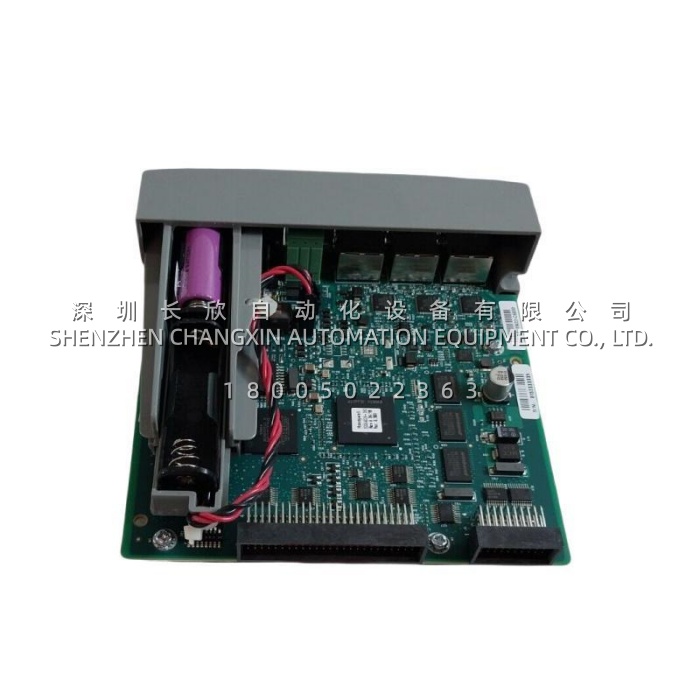
A specialty chemicals plant runs a batch reactor train on a Honeywell HC900 system, with the 900C75S-0360-00 pair driving both the process control strategy and the reactor’s emergency shutdown logic. The reactors are exothermic; a cooling failure has a documented runaway scenario, and the site’s hazard study requires SIL2-rated shutdown functions.The pain point this installation was designed around is not routine control — it is the moment when the controller itself becomes the risk. In a simplex architecture, a processor fault during a critical batch does not just stop the control loop; it can leave final elements in an indeterminate state while operators scramble. On a reactor, that is unacceptable. With the redundant 900C75S-0360-00 pair, the standby CPU is already executing the same strategy and holding the same process image, so a fault on the primary results in a bumpless transfer rather than a process upset. Valves do not chatter, the batch does not have to be aborted, and the safety function remains available throughout.The second pain point is the one the “S” suffix addresses. Many plants historically ran process control on one platform and safety shutdown on a separate, dedicated safety PLC — two hardware families, two engineering tools, two spare inventories, and an integration layer between them that itself had to be validated. The HC900 architecture with the 900C75S-0360-00 allows safety and process functions to coexist in one non-interfering software environment, with password-protected separation of safety configuration from process configuration. For a plant without a large safety engineering department, that consolidation is often the difference between having a properly validated safety function and having one that quietly degrades over the years because nobody has time to maintain two systems.Typical deployments extend well beyond reactors: burner management systems on fired heaters and boilers, emergency shutdown on pipelines and terminals, fire and gas monitoring, and spill prevention — all listed by Honeywell among the HC900’s target safety applications.
3. Parameter:
| Main Parameters | Value/Description |
|---|---|
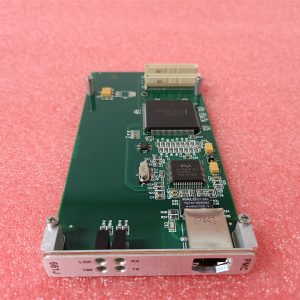
| Product Model | 900C75S-0360-00 — C75S level; “S” denotes the SIL-capable variant (compare 900C75-0360, standard, non-safety) |
| Manufacturer | Honeywell — ControlEdge HC900 process and safety system |
| Product Category | Redundant controller CPU module (hybrid process controller with SIL2 safety capability) |
| System Family | ControlEdge HC900 / Honeywell HC900 process and safety platform; integrates with Experion PKS and 900 Control Station |
| Processor Architecture | 32-bit RISC processor (e300 class, HC900 C75 platform); executes control strategy, sequence logic and rack communication |
| Scan Performance | Dual-scan architecture — logic scan approx. 25–27 ms, analog scan approx. 0.5 s; independently adjustable periods |
| Control Capacity | Up to 4,608 I/O points (1,152 universal analog inputs / 2,304 high-level AI, 480 AO, 4,608 DI, 4,608 DO depending on configuration); approx. 5,000 configurable function blocks; up to 32 PID loops on typical C75 configurations |
| Memory | 128 MB DDR2 with battery backup (ECC on safety-relevant variants); program stored in non-volatile flash, retained through power loss |
| Communication Interfaces | 2 × RS-485 serial ports (Modbus RTU, master or slave configurable); up to 3 × 10/100Base-T Ethernet ports depending on configuration |
| Supported Protocols | Modbus TCP/IP, Modbus RTU, EtherNet/IP, OPC / OPC UA, Honeywell peer-to-peer — covering DCS, HMI, SCADA and third-party device integration |
| Redundancy | Dual-CPU hot standby with automatic, bumpless failover; requires the approved redundant controller rack and the 900RSM-0001 redundancy switch module; redundant Ethernet and power supported |
| Safety Certification | SIL2 per IEC 61508 / IEC 61511, TÜV certified — usable for BMS, ESD, fire & gas and HIPPS-class safety functions |
| Supply Loading | 5 V DC from the rack backplane, 1,500 mA maximum |
| Power / Environment | Controller rack supplied at 24 V DC; typical module consumption approx. 12 W |
| Diagnostics | Continuous self-diagnostics, system status monitoring, fault annunciation, independent hardware watchdog; front-panel LED status |
| Programming Software | Honeywell Hybrid Control Designer (HCD) / ControlEdge Builder — function block diagram and ladder logic |
| Installation Method | Plugs into the HC900 redundant controller rack (e.g. 900RR0-0101); rack mounts on 35 mm DIN rail or by wall/backplate mounting; hot-swap supported only in a redundant configuration |
| Environmental Adaptability | Operating 0 °C to +60 °C (32 °F to +140 °F); storage −40 °C to +85 °C on most listings; humidity 5–95 % RH non-condensing; IP20, control-cabinet installation |
| Mechanical / Weight | Approx. 137 × 38.1 × 151.7 mm module envelope; approx. 0.25–0.85 kg depending on how the unit is measured (module vs. packaged) |
| Certifications | TÜV SIL2, CE, UL, CSA (HazLoc Class I Div 2), FM, ATEX, ABS, RoHS |
| Origin / Trade Data | USA (some listings indicate Japan for associated modules); HS code typically 8537.10 |
4. Technical Principles and Innovative Values:
Innovation Point 1: Safety and process control in one non-interfering architecture. The 900C75S-0360-00 is built on the HC900’s non-interference principle: process configuration, alarm handling and data acquisition are separated from the safety function by password-protected partitions within one environment. Plants get one hardware family, one engineering tool and one spare pool, while still meeting IEC 61511 requirements for functional separation — a structural cost advantage over maintaining two independent systems.Innovation Point 2: Redundancy implemented in hardware, not negotiated in software. With the 900C75S-0360-00 installed as a matched pair alongside the 900RSM-0001 redundancy switch module, failover logic executes in dedicated hardware on a sub-scan timescale. The standby CPU maintains a mirrored process image continuously, so the transfer is bumpless: outputs hold their last good value instead of stepping, which is precisely what prevents the valve chatter and spurious trips that plague software-mediated switchovers.Innovation Point 3: Dual-scan execution tuned for mixed workloads. The 900C75S-0360-00 runs logic and analog processing on separate, independently adjustable scan periods — fast logic at roughly 25 ms, analog at roughly 0.5 s. A batch plant with fast interlocks and slow temperature loops no longer has to slow its logic to match its thermocouples, or force analog scanning faster than the process warrants.Innovation Point 4: Non-volatile strategy with battery-backed dynamic data. The control strategy is held in flash, so a power loss or module replacement does not lose the application; dynamic data is preserved by battery-backed RAM. For a safety function, this means a CPU exchange is a hardware event rather than a re-engineering project — provided firmware and safety revisions are matched.Innovation Point 5: Open connectivity without a gateway tax. With Modbus TCP, Modbus RTU, EtherNet/IP and OPC on board, the 900C75S-0360-00 talks directly to HMIs, third-party PLCs, analysers and the Experion PKS layer. Plants routinely report that eliminating separate protocol gateways removes both a cost line and a distinct failure point per network segment.Innovation Point 6: Diagnostic visibility designed for the technician. Self-diagnostics, system status monitoring and LED annunciation on the 900C75S-0360-00 mean a failed processor is identifiable at the cabinet door. In redundant service that translates into a specific, actionable maintenance task rather than an unexplained process event — the module keeps running on the partner CPU while the fault is addressed.