WhatsApp:+86 18005022363 WeChat: +86 18005022363
  Email:
Description
Application Scenarios:
A Scandinavian pulp and paper mill runs a SattLine control system whose central rack sits in the main electrical room, while the stock preparation and bleaching plants sit 300 metres away across a wet, corrosive, electrically noisy process area. The original design used the 200-CICN to reach that remote I/O over ControlNet: one interface unit in the central rack, a coax trunk with taps and 1 m drop cables, and a string of 200-ACN remote adapters each carrying up to eight I/O units. For twenty years that arrangement worked because of one property — ControlNet’s CTDMA access method gives every node a guaranteed, repeating time slot, so the I/O scan is deterministic regardless of how much traffic is on the trunk.The pain point arrived with the mill’s reporting requirements. Production, quality and energy data had to reach the site MES and the corporate historian, and the SattLine rack spoke ControlNet and SattBus, not IP. The mill’s first attempt — an external protocol converter polled over a serial channel — became the single least reliable component in the system, and every time it hung, the data gap had to be reconciled by hand. The resolution was to add a 200-CIE to the same central rack. The ControlNet remote I/O layer stayed exactly as it was; the Ethernet unit gave the supervisory systems a native TCP/IP endpoint with Modbus TCP, and gave the maintenance team Ethernet-based programming and online monitoring. No I/O was re-addressed, no trunk was re-terminated, and the deterministic remote I/O scan was left untouched.This is the pattern 200-CICN and 200-CIE serve across the installed base: water and wastewater treatment works with remote pumping stations, district heating networks, power plant auxiliary and balance-of-plant systems, food and beverage, pharmaceutical and chemical batch plants, marine and offshore packages, and any facility where a SattCon 200 or SattLine rack still runs the process well enough that replacing it cannot be justified. The pain point is almost never throughput. It is that the process data is trapped behind a bus protocol nobody outside the rack speaks, and that every remote I/O drop is a long coax run through a hostile environment that nobody wants to re-engineer.
3. Parameter:
| Main Parameters | Value/Description |
|---|---|
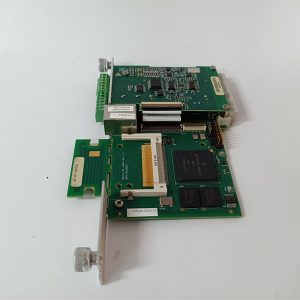
| Product Model | 200-CICN (order code 200-CICN, part number 492897801) and 200-CIE |
| Manufacturer | ABB — Series 200 hardware platform for SattCon 200 and SattLine distributed control systems; country of origin Sweden |
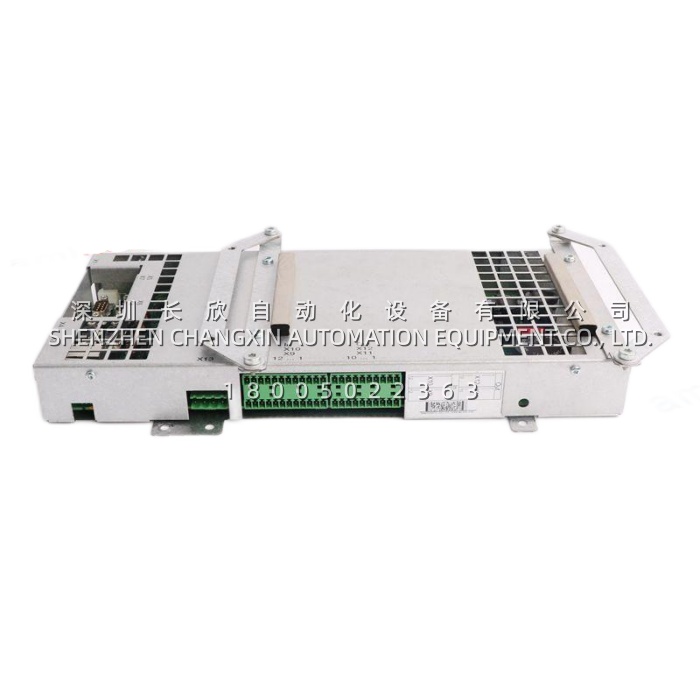
| Product Category | Communication interface units (central system modules) — 200-CICN is a ControlNet remote I/O scanner; 200-CIE is an Ethernet / TCP/IP communication interface |
| Network Protocol | 200-CICN: ControlNet, CTDMA (Concurrent Time Division Multiple Access) — a scheduled access method that guarantees each node a repeating time slot, which is what makes the I/O scan deterministic rather than best-effort. 200-CIE: TCP/IP suite with Modbus TCP (server), FTP file transfer, and programming/online monitoring over Ethernet |
| Transmission Rate | 200-CICN: 5 Mbit/s. 200-CIE: 10/100Base-TX auto-sensing, IEEE 802.3 |
| Physical Interface | 200-CICN: 1 × BNC 75 Ω connector on the front panel, connected to the ControlNet coax trunk via a tap and a 1 m drop cable; 200-CIE: 1 × RJ45 twisted-pair port |
| Network Capacity | 200-CICN acts as an I/O scanner for up to 31 200-ACN remote I/O adapters, each carrying up to eight I/O units; the permitted number of adapters depends on the CPU in use (SattCon 200 or SattLine) |
| Node Addressing | 200-CICN: two front-panel rotary switches set the ControlNet node address — no software tool or laptop required to commission a replacement; 200-CIE: IP address set by rotary switch or by software configuration |
| Electrical Isolation | 200-CICN: galvanic isolation via an insulation (signal) transformer on the ControlNet transceiver — the barrier that keeps a trunk fault or ground-potential difference out of the backplane |
| Power Supply | Both units are powered from the Series 200 central system supply (200-PSMG master / 200-PSSG slave), not from a separate field feed; 200-CICN draws a maximum of 0.5 A internally |
| Diagnostics & Status Indication | 200-CICN: one green LED for internal power plus three bicolour (red/green) LEDs for channel status, giving instant read-out of unit health and ControlNet channel A/B condition; 200-CIE: LEDs for power, network link and activity |
| Dimensions, Weight & Mounting | 200-CICN: H 163 × W 45 × D 91 mm excluding connectors and snap locks; 0.25 kg (0.33 kg packaged). Both units are DIN-rail mounted on 200-BPN backplanes, each backplane holding two central system units, with mechanical key coding to prevent a replacement unit being inserted into the wrong slot |
The Series 200 platform as a whole supports serial communication (RS232/RS485), ControlNet, SattBus, Ethernet and PROFIBUS-DP, and holds I/O outputs in a defined safety state in the event of a remote I/O communication failure. Note that reseller listings sometimes describe these codes as EtherNet/IP or PROFINET devices; the ABB Series 200 documentation supports ControlNet for 200-CICN and TCP/IP with Modbus TCP for 200-CIE, and the label and CPU type on your installed unit remain the final authority.