WhatsApp:+86 18005022363 WeChat: +86 18005022363
  Email:
Description
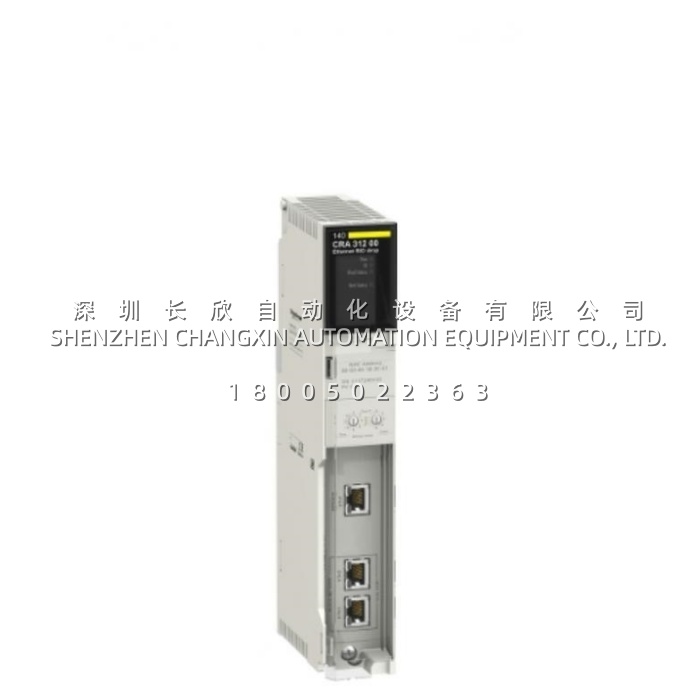
Application Scenarios
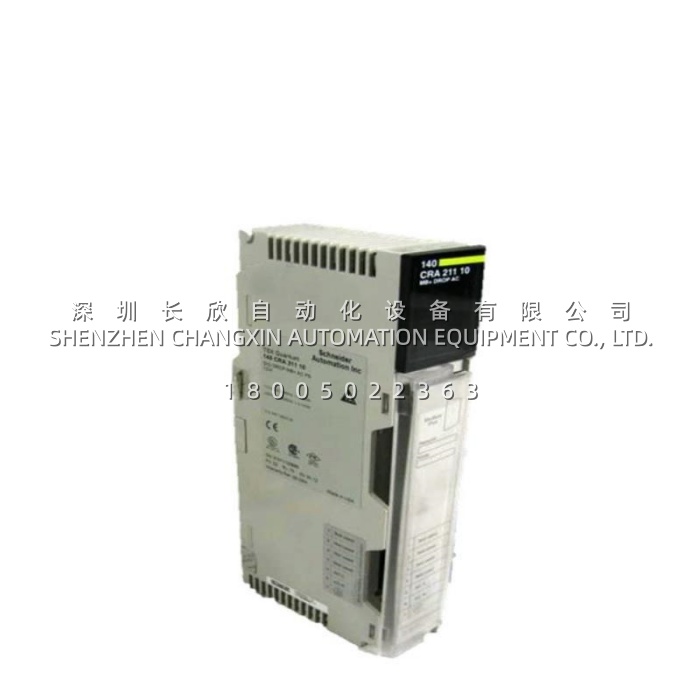
Picture a large regional water‑treatment campus spread across hundreds of meters: the central control room houses the primary Modicon Quantum PLC, but pumps, valves, flow meters, and analytical instruments are scattered across half‑a‑dozen processing buildings. Running individual I/O home‑runs from every field device back to the main rack would mean thousands of meters of cable, massive termination panels, and a maintenance nightmare. By deploying the 140CRA31200 as the remote I/O drop adapter at each satellite substation, the facility connects its distributed I/O racks to the central controller via a single Ethernet cable per node. The 140CRA31200 exchanges input data with the 140CRP31200 head adapter in the main rack deterministically over EtherNet/IP, while its dedicated service port lets technicians plug a laptop or HMI directly into any drop for diagnostics—without touching the control network. The result: installation wiring costs cut by over 60 %, fault‑isolation time reduced from hours to minutes, and a redundant ring topology that guarantees a single cable break will never stop a pump station from reporting to the SCADA system.
Parameter
| Main Parameters | Value/Description |
|---|---|
| Product Model | 140CRA31200 |
| Manufacturer | Schneider Electric |
| Product Series | Modicon Quantum 140 |
| Product Category | Ethernet Remote I/O (RIO) Drop Adapter |
| Communication Protocols | EtherNet/IP (device network), Modbus TCP (service port) |
| Ethernet Ports | 3 × 10/100Base‑T RJ45 (2 device network, 1 service) |
| Network Topology | Daisy chain, RSTP redundant ring, star (via switch) |
| I/O Drops per Network | Up to 31 remote 140CRA31200 drops per 140CRP31200 scanner |
| Head Adapter Pairing | Must pair with 140CRP31200 head adapter |
| Slot Position | Slot 1 of Quantum remote I/O drop backplane |
| Backplane Power | 5 V DC, ≈ 750 mA, power consumption ≈ 3.5 W |
| Station Address | Rotary switch, 00–159 (set before power‑up) |
| Diagnostics | 4 LEDs: RUN (green), I/O Fault (red), Net Status (green/red), Mod Stat (green/red) |
| Mounting | Standard single‑slot Quantum backplane (140XBP series) |
| Protection Rating | IP20 (indoor control cabinet) |
| Operating Temperature | 0 °C to +60 °C |
| Storage Temperature | ‑40 °C to +85 °C |
| Relative Humidity | 5 %–93 % RH, non‑condensing |
| Vibration Resistance | 3.5 mm constant amplitude (0.5–8.4 Hz) |
| Hazardous Area | Class I Division 2 (EN/IEC 61131‑1) |
| Physical Dimensions | 167 mm (W) × 50 mm (H), single‑slot |
| Weight | 0.554 kg |
| Certifications | CE, UL 508, cUL, C‑Tick, KC |
| EMC Compliance | IEC 55011 / CSA C22.2 |
| MTBF | 1,397,625 hours |
| Lifecycle Status | Discontinued (EOL); new‑surplus stock available |
| Warranty | 12 months (new original) |
Technical Principles and Innovative Values
- Innovation Point 1 – Deterministic EtherNet/IP I/O Exchange. The 140CRA31200 uses the CIP “implicit” messaging model over EtherNet/IP to publish its local rack’s input data to the 140CRP31200 head adapter and simultaneously update its output modules with controller commands, all within a predictable, repeatable scan time. Unlike standard TCP traffic that is subject to network jitter, this implicit I/O exchange is scheduled and deterministic—critical for time‑sensitive closed‑loop control in power, water, and process applications.
- Innovation Point 2 – Three‑Port Architecture with Physical Traffic Separation. The 140CRA31200 integrates three distinct RJ45 ports: two device‑network ports handle real‑time EtherNet/IP I/O traffic and form the redundant ring; the third service port carries Modbus TCP exclusively for engineering workstations, HMIs, and SCADA read‑only access. This physically separates control traffic from maintenance/diagnostic traffic, so a laptop upload or a firmware pull will never consume bandwidth needed by the control loop.
- Innovation Point 3 – Daisy‑Chain & RSTP Ring Redundancy. Thanks to its dual device‑network ports, the 140CRA31200 supports daisy‑chain looping. When the two ports are connected end‑to‑end across multiple drops, a redundant ring is formed; if a single cable segment is cut, RSTP (Rapid Spanning Tree Protocol) reroutes data through the alternate path in milliseconds. This eliminates the single‑point‑of‑failure risk inherent in star‑topology remote I/O, a decisive advantage for automotive lines where downtime costs thousands of dollars per minute.
- Innovation Point 4 – Rotary‑Switch Station Addressing. Each 140CRA31200 is assigned its drop address (00–159) via a front‑panel rotary switch using a small flat‑tip screwdriver—no software configuration required. The address takes effect at the next power cycle, and any mismatch between the switch setting and the downloaded application is flagged by the Mod Status LED and logged to the module’s diagnostic buffer. This makes commissioning and replacement strikingly simple: a technician can swap a faulty drop module, set the rotary switch to the same number, and power up—no laptop, no programming tool.
- Innovation Point 5 – Hot‑Standby & Hazardous‑Location Ready. The 140CRA31200 is fully compatible with Quantum Hot‑Standby redundant CPU architectures, ensuring I/O continuity during a controller switch‑over. Its compliance with Class I Division 2 hazardous‑location standards and IEC 61000‑4‑16 immunity requirements means the module can be deployed directly in petrochemical, mining, and heavy‑manufacturing environments where electrical noise and volatile atmospheres are the norm.
Application Cases and Industry Value
Case 1 – Regional Water‑Treatment Plant Distributed I/O (USA, 2025). A municipal water authority operating 6 pumping stations spread across a 300‑meter campus replaced its legacy hard‑wired I/O home‑runs with a 140CRA31200‑based EtherNet/IP RIO network. Each pump station received a Quantum remote drop equipped with a 140CRA31200; the six drops were daisy‑chained into a redundant ring terminated at the central 140CRP31200 head adapter in the main control building. Total field‑cable pulled dropped from an estimated 14 km to under 2 km, saving US $210,000 in copper and conduit costs. Six months after commissioning, a contractor accidentally severed one ring segment with an excavator; RSTP rerouted data in under 50 ms, and the SCADA system never lost visibility of any pump station. The plant’s automation supervisor noted: “The 140CRA31200 paid for itself in wiring savings alone—the ring redundancy was just a bonus that saved us during that cable cut.”